Allegra

Richmond Theatre • 8th June - 13th June
There probably aren’t many actor’s I’d travel from one side of London to the other to see, even less so a playwright, but with the arrival of Peter Quilter’s new play Allegra, currently starring Maureen Lipman at the Richmond Theatre, I was compelled to do just that. As a playwright Quilter would certainly seem to be very much in vogue at the moment given this, his latest play, follows hot on the heels of recent revival productions of Glorious, (at the Theatre Royal Windsor in March - see review here), and even more recently his critically acclaimed examination of the final months in the life of Judy Garland, which took me back to the magnificent, (and thankfully much closer to home) Soho Theatre Walthamstow to see End Of The Rainbow, (see review here). It would seem stunning venues are as much a part of the full ‘Peter Quilter experience’ as the plays themselves, the Grade II listed Richmond Theatre having been designed by the legendary architect Frank Matcham, a fitting venue for this limited one week pit-stop for Allegra before it’s UK national tour continues its run with a month long West End residency at the Harold Pinter Theatre (8th July - 8th August).
All of that being said, the real appeal of Allegra was the chance to see Maureen Lipman performing in the titular role who, despite having had a long and distinguished theatrical career, I had somehow yet to have had the pleasure of seeing on stage, it instead being as Agony Aunt Jane Lucas in the ground-breaking 1979 sitcom Agony that had instead brought Lipman so memorably into my consciousness. It would be a profound moment for me, and probably every other gay teenager coming to terms with their sexuality in the late seventies, given Agony was one of the first mainstream sitcoms to not only feature a gay couple so prominantley,(as Lipman’s neighbours in the show), but to also have them portrayed as such multi-dimensional, sympathetic characters rather than the usual cliched caricature that existed only to serve the punchline of a clumsily written, not to mention often offensive joke. What a gift it was for my thirteen-year-old self to find such a relationship not only being portrayed on TV, but on my parents’ suburban TV, Lipman’s own character being of equal importance as their very progressive, forward-thinking friend, the likes of which had not been seen in 1979.
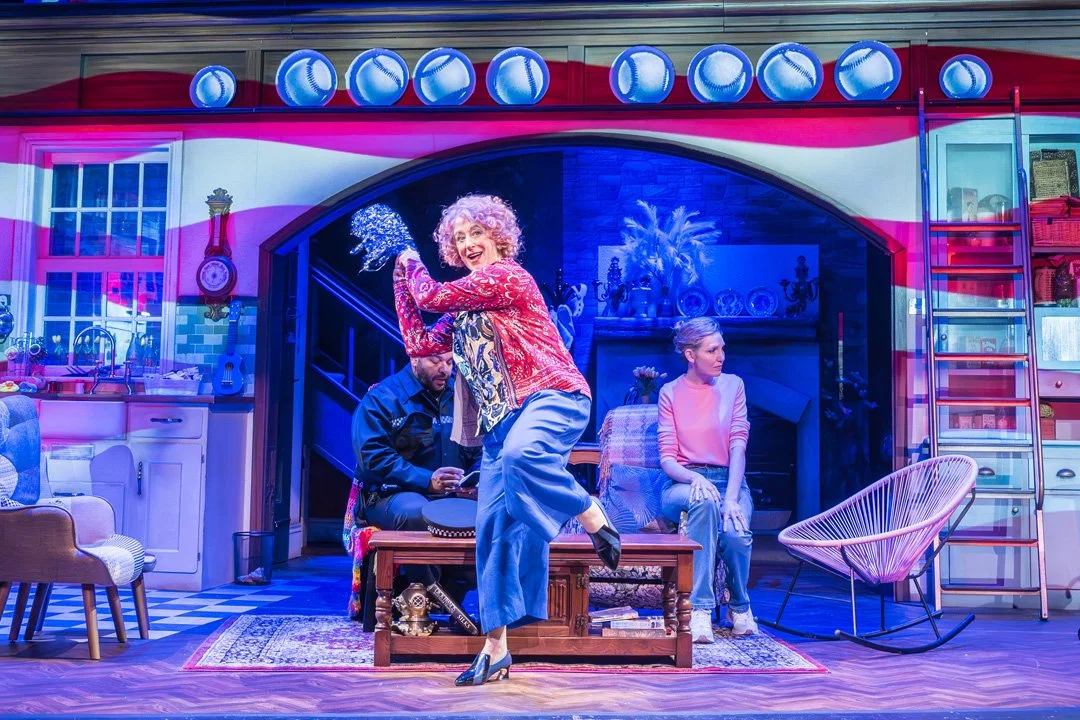
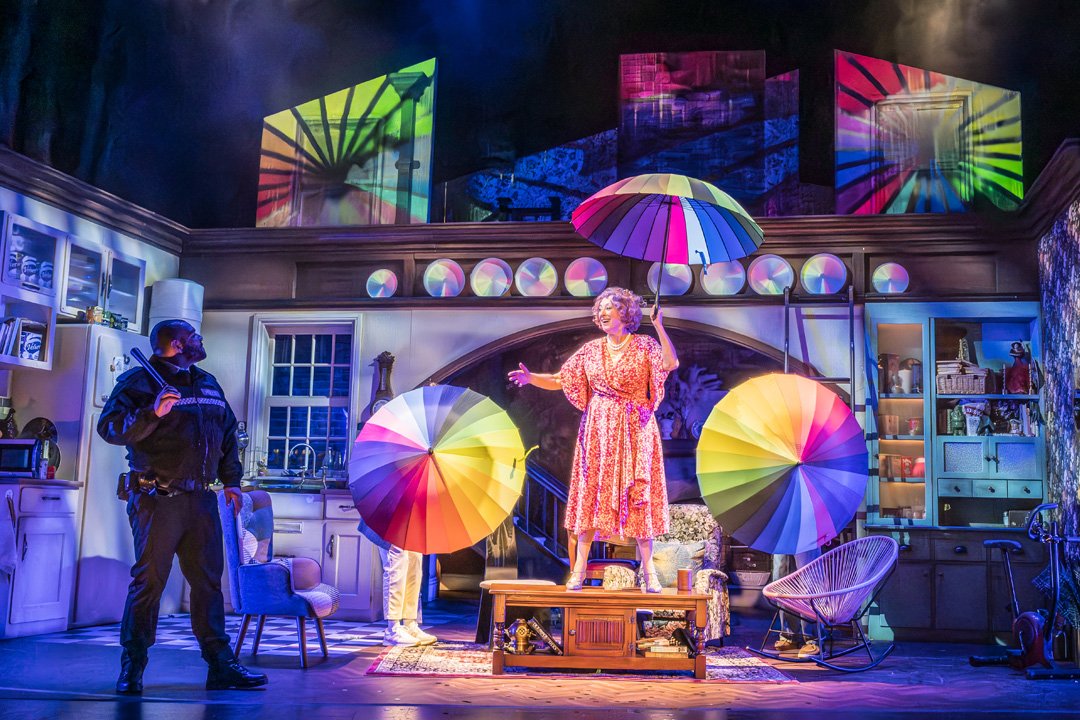
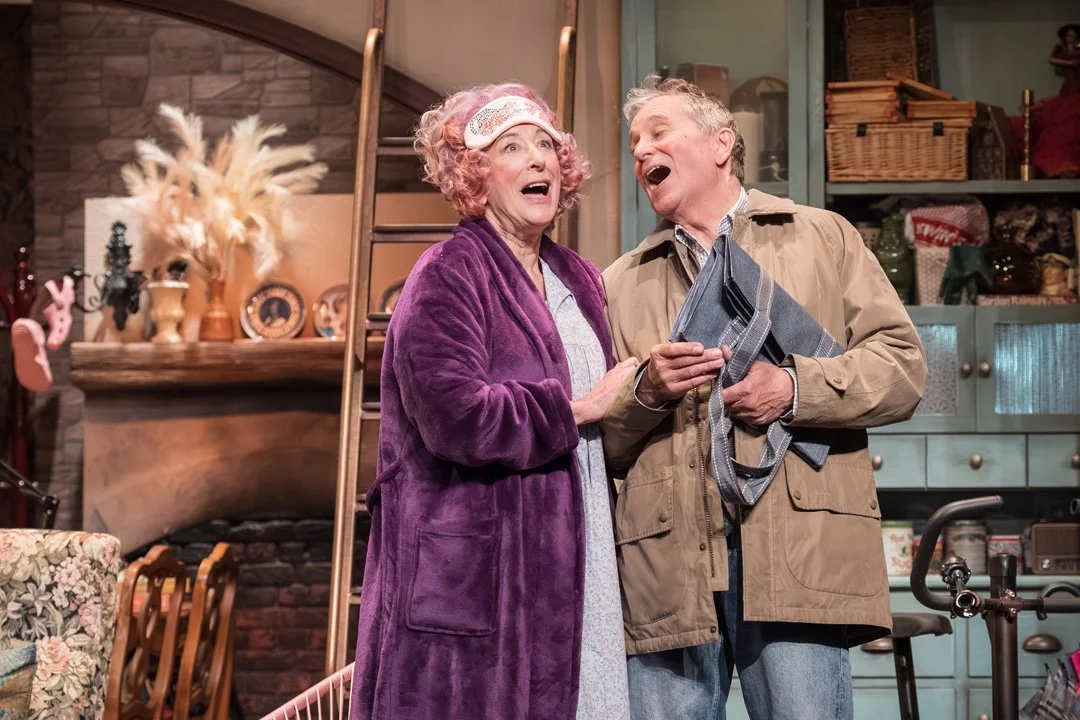
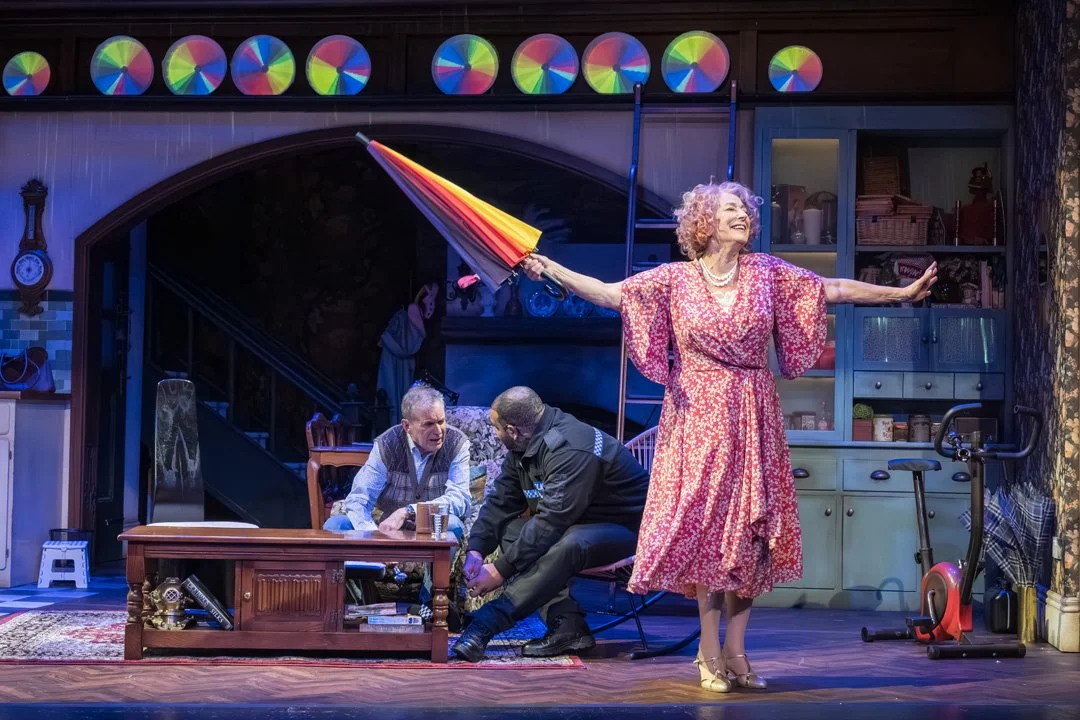
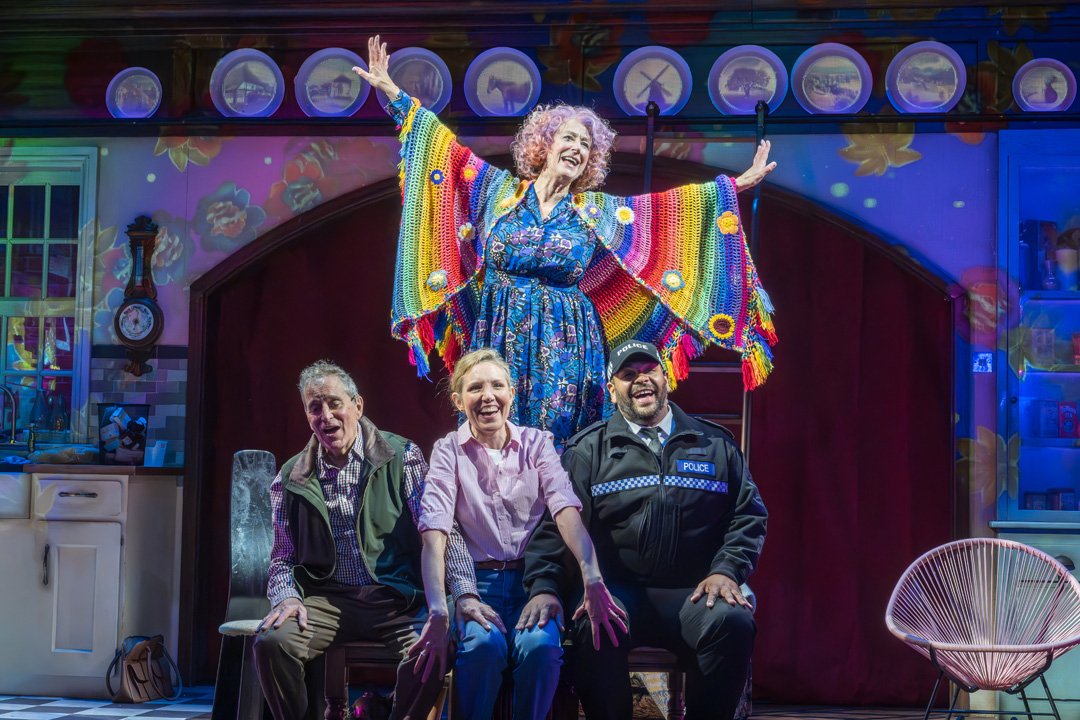
Fast forward 47 years and the opportunity to see Lipman perform on stage had finally arrived, made all the more enjoyable by seeing her gloriously inhabit a comedic character, the likes of which she does so well. Unconventional, forthright, eccentric and with a certain flamboyant flare. Whether the rainbow-coloured umbrella, or the similarly multicoloured throw strewn across an armchair that played a small part of Justin Williams impressive kitchen set design, were nods to this legacy of allyship is unknown, but that’s certainly how this particularly grateful audience member chose to read them.
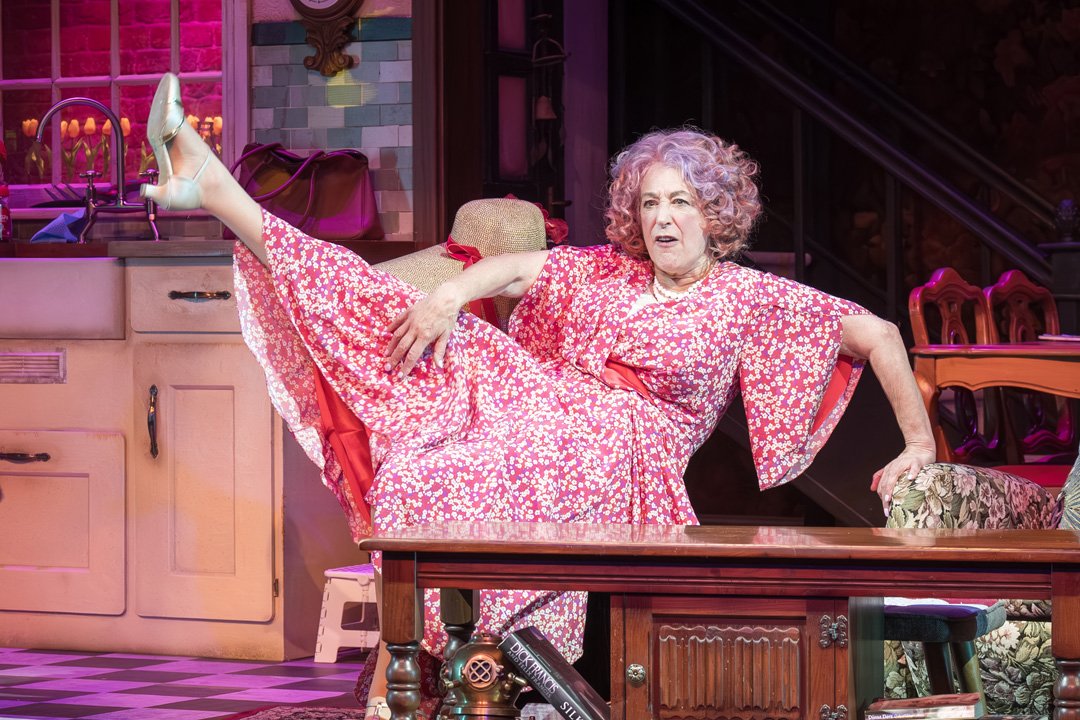
But what of the play itself? It quickly becomes very clear that Quilter revels in the opportunity to write about women of a certain age, not to mention of a decidedly eccentric disposition, and there was more than one moment where Lipman’s character shared a distinct resemblance to the Florence Foster Jenkins of Quilter’s play Glorious. Given that had itself been a role Lipman had originated in 2005, (for which she earned an Olivier nomination), I can only assume the similarities were not lost on her either. Both characters like to sing… a lot… yet neither are able to find a particularly appreciative audience, but while Foster-Jenkins had the financial where-with-all to perform her own dreadful opera recitals on stage, Allegra’s ‘talent’ finds its own unsuspecting audiences during visits to the bakers, the petrol station and to the hairdressers. Where the two characters also differ is that Foster-Jenkins is delusional about the questionable quality of her voice, whereby the motivation for Lipman’s character is just to try and bring a little joy into people’s lives… even if the emotional response derived from her impromptu renditions proves to be quite the opposite.
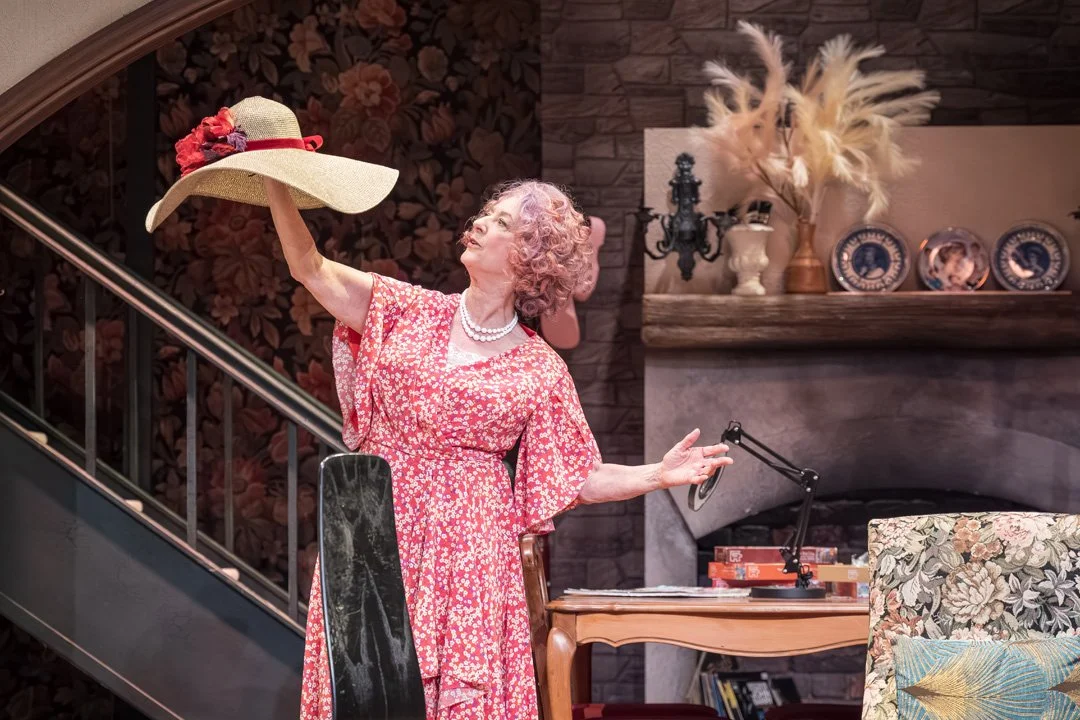
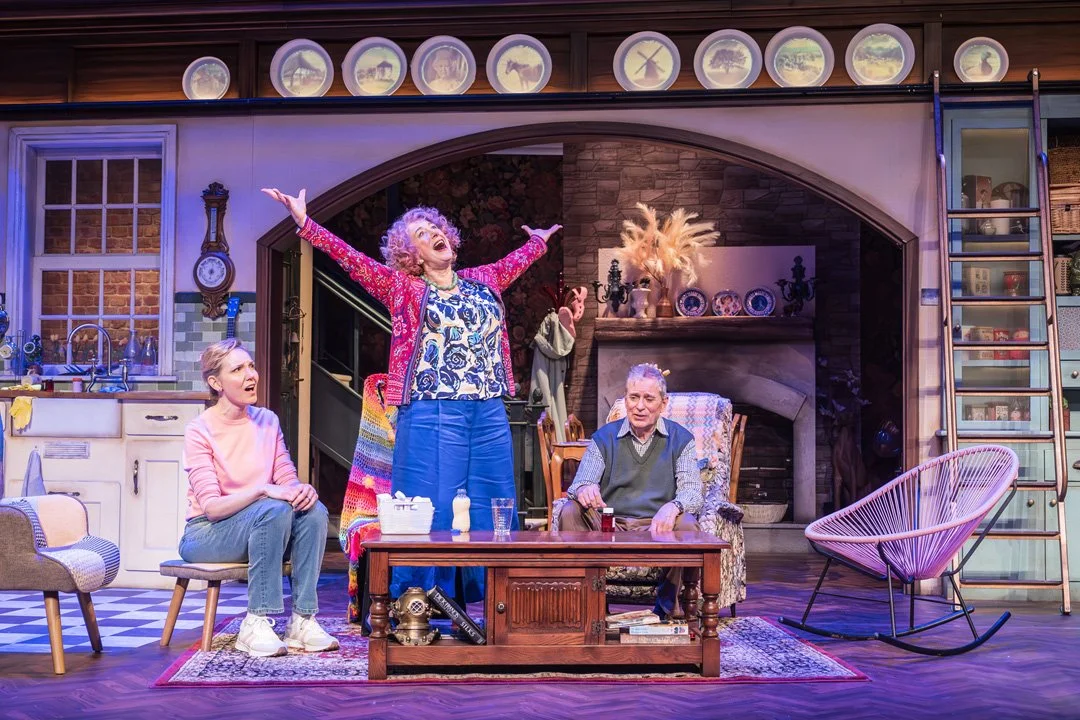
Allegra’s brother, Ronen, (John Middleton), is worried that her behaviour is becoming increasingly erratic, and that his widowed sister, who lives alone, is now in need of a carer, especially as he has repeatedly found her fridge and cupboards to be devoid of any food during his frequent visits. These worries, that her mind may not be quite as sharp as it once was, means Czech home-help Anna, (Elizabeth Bower), is employed as cleaner, carer and companion. Despite still being able to engage the concerns of both her brother and carer with a sharpness of wit, from which Quiter is able to find most of the plays finest comedy moments, her mind isn’t beyond playing tricks on her as, when she isn’t unceremoniously serenading the neighbourhood, she is prone to go on imaginative musical flights of fancy, believing herself to be performing full musical routines to an appreciative audience, (during which director Stephen Mear playfully gets close to breaking the fourth wall, making the audience play their own collective part in Allegra’s imaginative musical interludes).
Such moments, that find the reality of Allegra’s life interrupted by these fully choreographed song and dance hallucinations, owe much to Dennis Potter’s much lauded 1986 TV miniseries The Singing Detective, it feeling almost like an homage to the then innovative dramatic device. Thankfully Allegra’s own moments of sureal song-and-dance dreams were stage-directed with such flair and ingenuity that any direct compassion was quickly forgotten, (although I suspect this would have been of very little concern to the majority of an audience probably not even born when Michael Gambon played the lead in the critically acclaimed TV series).
Slightly more jarring however was when the well-constructed and sharply delivered comedic tone displayed throughout the majority of the play was allowed to slip into the altogether more whimsical theatrical tradition of farce, it seeming to occur mostly upon the arrival of Police Officer Rogers, (Bailey Patrick) whose increasingly frequent house calls are made neccesary due to the growing number of complaints being received about Allegra’s unrequested performances around the town. I wasn’t sure if the cause of this comedic key-change lay in the writing, or director Stephen Mear’s interpretation of the Policeman’s comedic potential, but it had certainly not been a style of humour I had noticed in Quilter’s previous plays, and I couldn’t help but feel this to be a stylistic inconsistancy within an otherwise entertaining, engaging and well-paced production. It certainly felt at odds to the plays latter moments of sobriety, it becoming genuinely moving to see Allegra’s joie de vivre, that we had watched burn so brightly, completely disappear after being ordered by a court to have her eccentricities medicated away. “It’s joie de vivre that keeps you going, and it’s lack of joie de vivre that will kill you”, artist David Hockney once said, and it’s certainly a sentiment being echoed in a production that sees Quilter also asking the bigger question of whether it is right to punish someone for being different just to appease a society that doesn’t know how to deal with them.
It’s a serious point that is otherwise surrounded by an unmistakably feel-good and often hilarious show. I don’t know if Quilter had Lipman in mind when her wrote the part of Allegra, (not entirely implausible given their success with Glorious twenty years earlier), but it is certainly a character well-tailored to her strengths as an actor. The large set, being that of Allegra’s kitchen, is well designed and holds a multitude of delicious secrets as the absurdist realities of Allegra’s life start to blend seamlessly with her imaginative flights of fancy. Qulilter has once again written an impressive comedy shot through with plenty of heart which, in Maureen Lipman’s capable hands, becomes a thoroughly entertaining night at the theatre.
★ ★ ★ ★
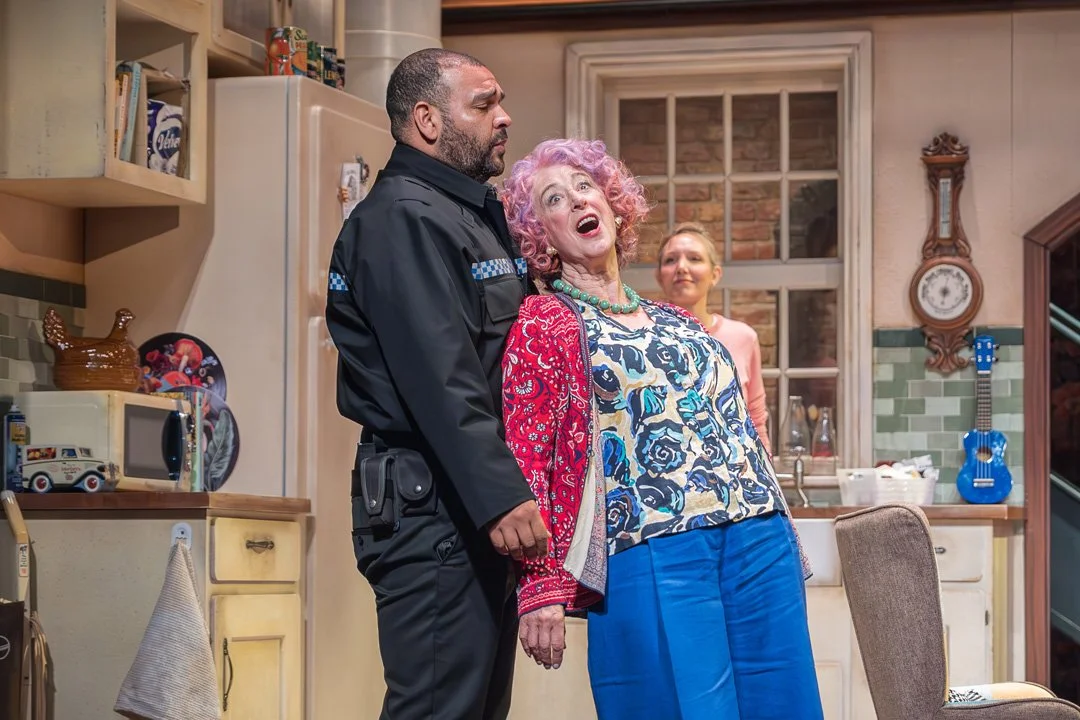
Allegra is on at the Richmond Theatre from 8th June to 13th June. Tickets available here and opens in the West End at the Harold Pinter Theatre 8th July to 8th August. Tickets available here.
review: Simon J. Webb
photographs: Marc Brenner