PRIDE
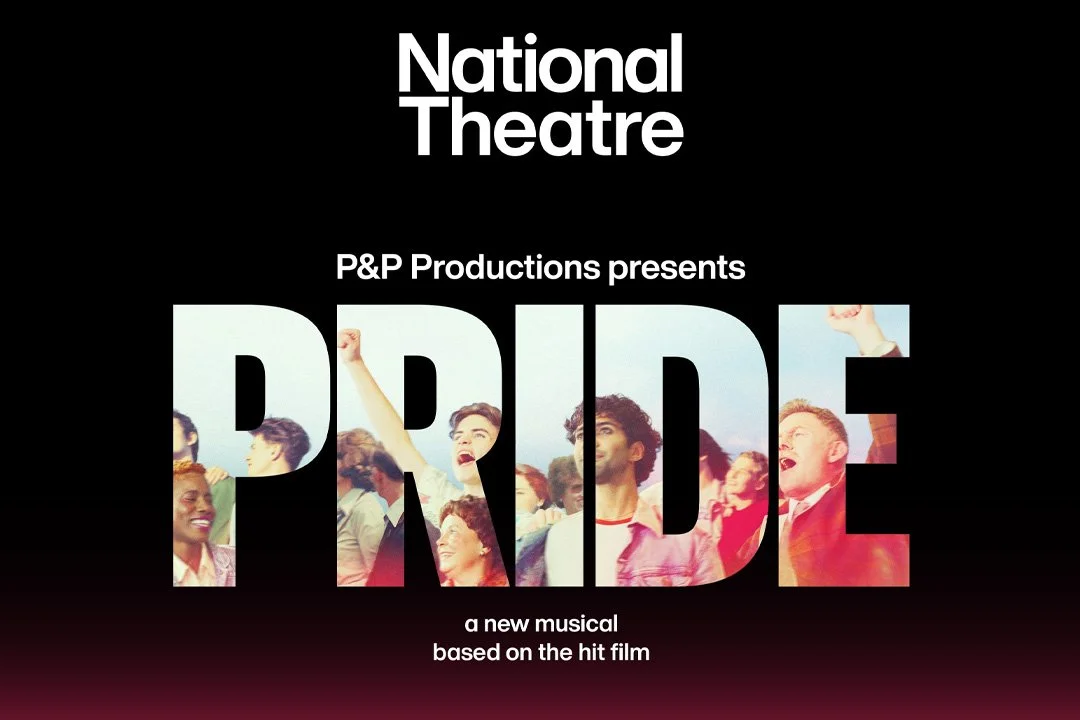
National Theatre’s Dorfman Theatre • 11th June - 12th September
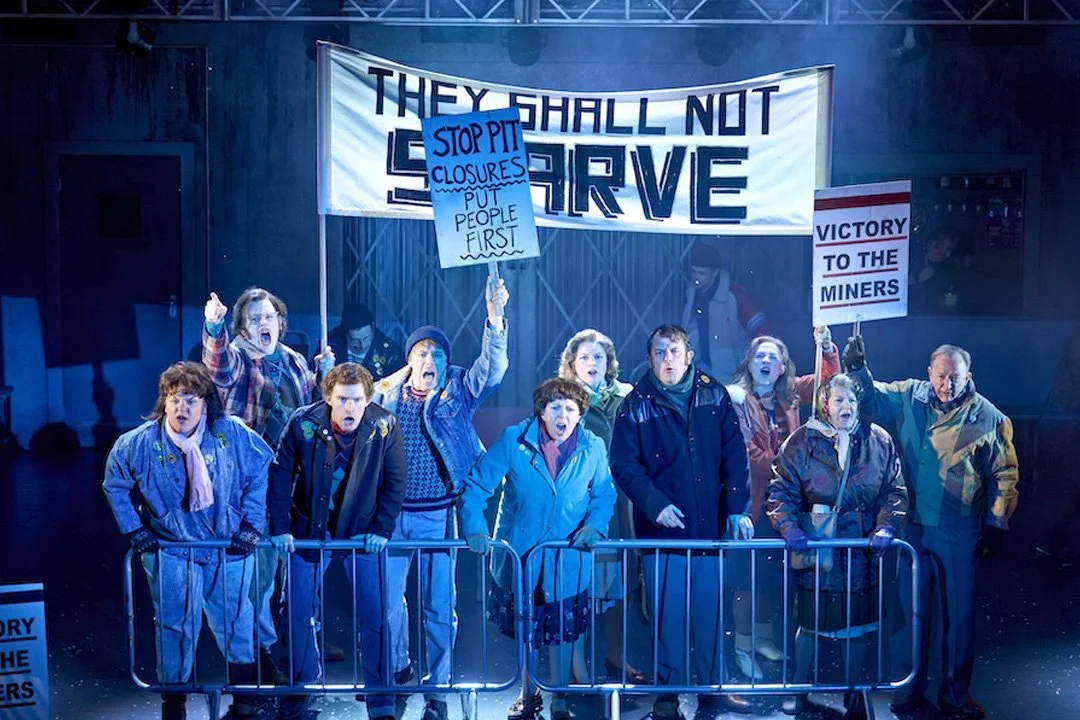
The heroic true life story about a group of gay and lesbian activists forming an alliance with a small, traditional mining community in the Dulais Valley of South Wales during the UK’s mining strike of 1984 - 1985 probably seems as unlikely a subject for a new musical in 2026 as it was for a film in 2014, but after the runaway success of the low-budget award-winning indie movie PRIDE in 2014, writer Stephen Beresford and director Matthew Warchus clearly felt there was more to be done with the story, allegedly proposing the idea of a new stage musical adaptation shortly after the film premiered. Fast forward to 2026 and the theatrical version of PRIDE has finally opened at the National Theatre’s Dorfman Theatre, the production having been tested and finessed during a short preview season at the Sherman Theatre in Cardiff earlier this year.
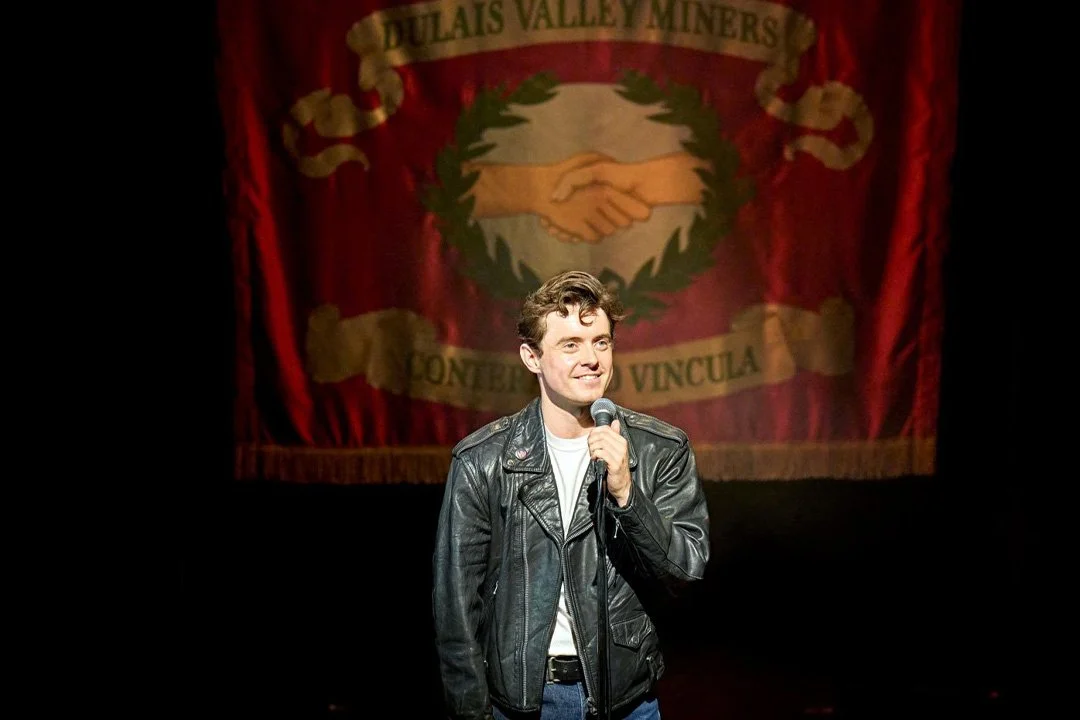
For those that may still be unfamiliar with the inspirational and moving events that this story is based on, (and I’d be surprised if there are many, given the success of the original film), Pride tells the story of Lesbian’s & Gays Support The Miners, a London group set up in July 1984 to raise money for striking miners and their families after one of the LGSM’s founders, a young activist named Mark Ashton, (played by Jhon Lumsden), recognises there is a shared enemy in the Thatcher government and the tabloid press. Despite his best intentions, the proposition of an alliance is as initially unappreciated by the small mining community as it is from his piers within the gay community, some thinking their activism would be better placed fighting for rights a lot closer to home. This is 1984 after all. Early cases of HIV are still being recorded in the UK, (although the name would not be assigned to the disease for another two years), and although it would take another three years before the devestating legislation of Section 28 would become law, the climate in the country was already becoming increasingly hostile towards gay men, raids and police entrapment cases being at an all-time high. At the centre of this stood the iconic Gay’s The Word bookshop, itself a victim of a police raid, and where the LGSM would congregate for their meetings, and from where the fight and the story of PRIDE begins.
Its a story that has always resonated deeply with me, (I was eighteen in 1984 and can clearly remember how dark the prospects felt for a young gay man still coming to terms with his sexuality), but I should confess that despite that, I was not the biggest fan of the original film, it sharing a far to familiar look and feel to any number of the social realism comedy-drama’s that British cinema seemed to have made its niche, (Billy Elliot, Made In Dagenham, Kinky Boots, Brassed off to name but a few), and whilst British cinema should be rightfully applauded for putting such stories onto the big screen, the familiarity with how these characters were being depicted for the purpose of mass entertainment were starting to feel all a bit too familiar. Fast forward twelve years and I couldn’t help but wonder if the new theatrical retelling of PRIDE would make good on such shortcomings, or indeed fall foul of my other bette noir, that being theatre’s increasing obsession with turning movies into musicals.
It is with some relief then that I found many, if not all of my previous misgivings immediately put to rest as PRIDE very quickly proves itself to be more than a worthy subject for this reimagined stage version. The production feels fresh, highly original and, somewhat sadly, still incredibly relevant. There may be some who argue that a musical treatment of the material still adds a bit too much by way of ‘entertainment’ to what was a devastating time for so many people, but both Beresford and Warchus are clearly more than aware of their duty to do right by the people who’s story they are telling, and manage to strike a balance so perfect that when you’re not crying with laughter you’ll find the tears once again welling-up with just how deeply the productions more heartbreaking moments hit, the oscillation between both emotions coming at a speed that catches me, and many in the audience, completely off gaurd.
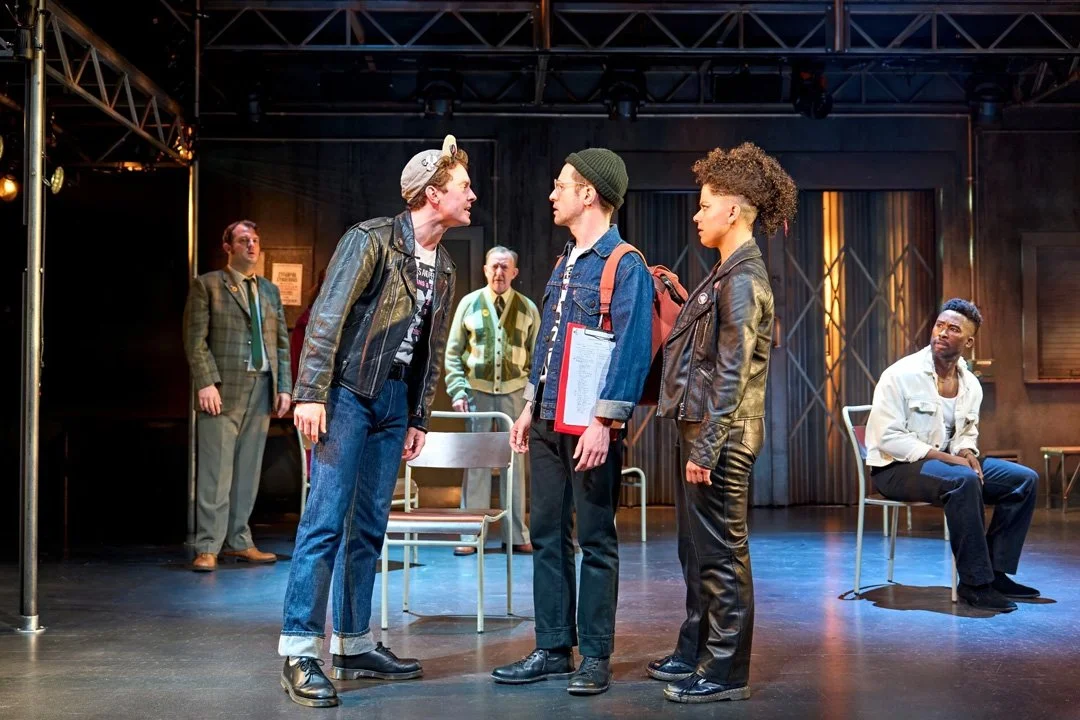
For others there will no doubt be the added impact of seeing some of their own lived experiences being played out on stage, either through having lost someone close to them during such an awful period in our history, or just reliving the unenviable experience of coming-out in a society who, on the whole, did not want us amongst them. This is beautifully encapsulated by the character of Bromley, (Lewis Cornay, who I last saw in Four Play at The Kings Head Theatre), whose own journey is both heartbreaking and life affirming in equal measure. It’s a performance that might not get the credit it deserves as Cornay finds himself surrounded by a cast delivering equally first class performances, including Samuel Barnett as Jonathon, (based in part on Jonathan Blake, one of the first people in the UK to be diagnosed with HIV, and who I had the great pleasure of interviewing for Jack The Lad - Issue 20), Matthew Durkan as Mike, (the member of the LGSM tasked with recording the events for posterity), and Matthew Woodyatt as Dai, (a union representative from the South Wales mining community). To be honest it seems a bit mean-spirited to only namecheck these few members of the cast, there not being a single lack-lustre performance amongst them. In fact, so engaging was this outstanding cast’s performances that I didn’t once find myself comparing them with any of their film counterparts, a sign of just how invested I very quickly became in this production.
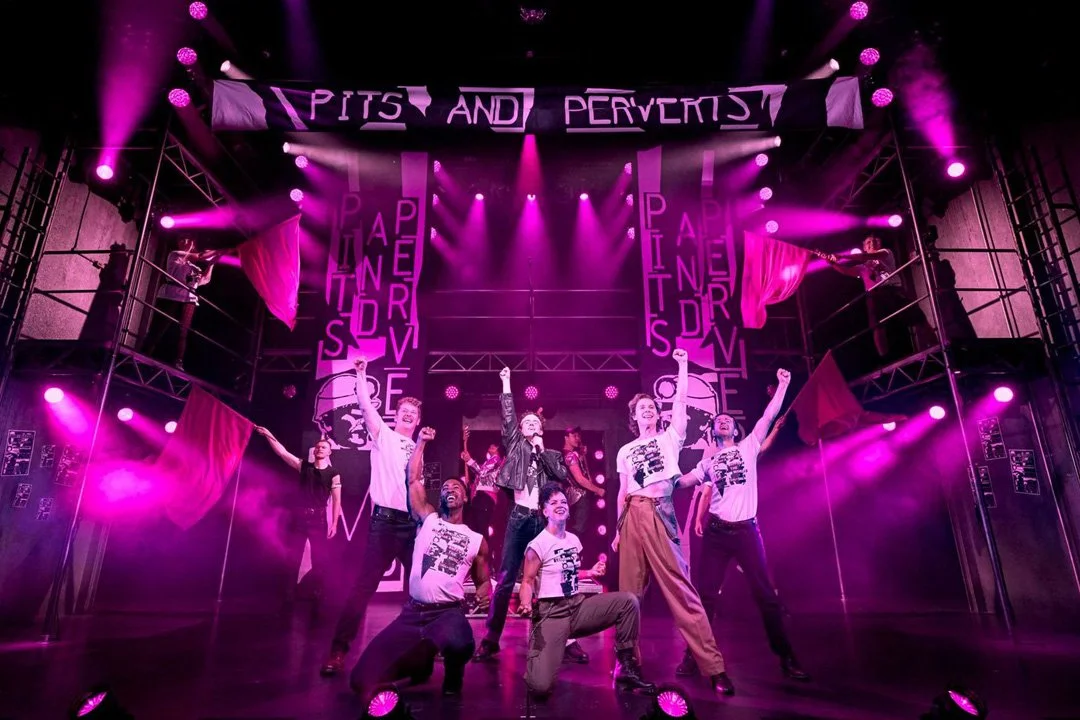
Being based on a true story, there are no real surprises in the timeline by way of how the events unfold but, being live theatre, there is plenty left to marvel at in the way it unfolds, and it is a masterclass in just how powerful a production can be when staging, (Bunny Christie), lighting, (Hugh Vanstone), choreography, (Lizzi Gee), music (Christopher Nightingale, Josh Cohen and DJ Walde) and direction all come together to seamlessly enhance and drive the story forward so impressively. Beresford himself is credited with writing the lyrics for the songs, with which the show is packed, that play their own part in amplifying moments of euphoria as well as perfectly underscoring the stories altogether more sobering moments.
This production certainly speaks volumes about the power of live theatre over film which, when done this well, can easily become an infinitely more powerful and rewarding experience, consigning PRIDE the film to being the amuse-bouche to this, Beresford and Warchus’s more gratifying main event. With a limited sold out run until 12 September, the website advises to check online regularly for returns, a sentiment I can only encourage given this is highly likely to be the must-see show of 2026 and, being theatre at it’s very best, I can only hope it will find itself in line for some major awards come next year’s Oliviers.
★ ★ ★ ★ ★
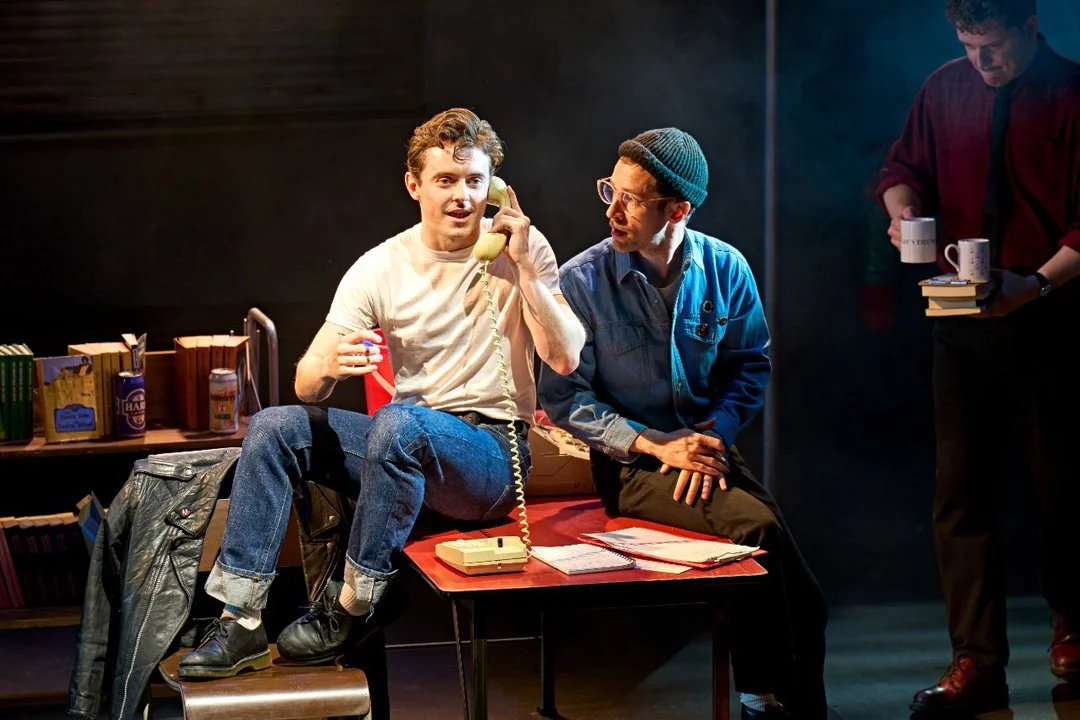
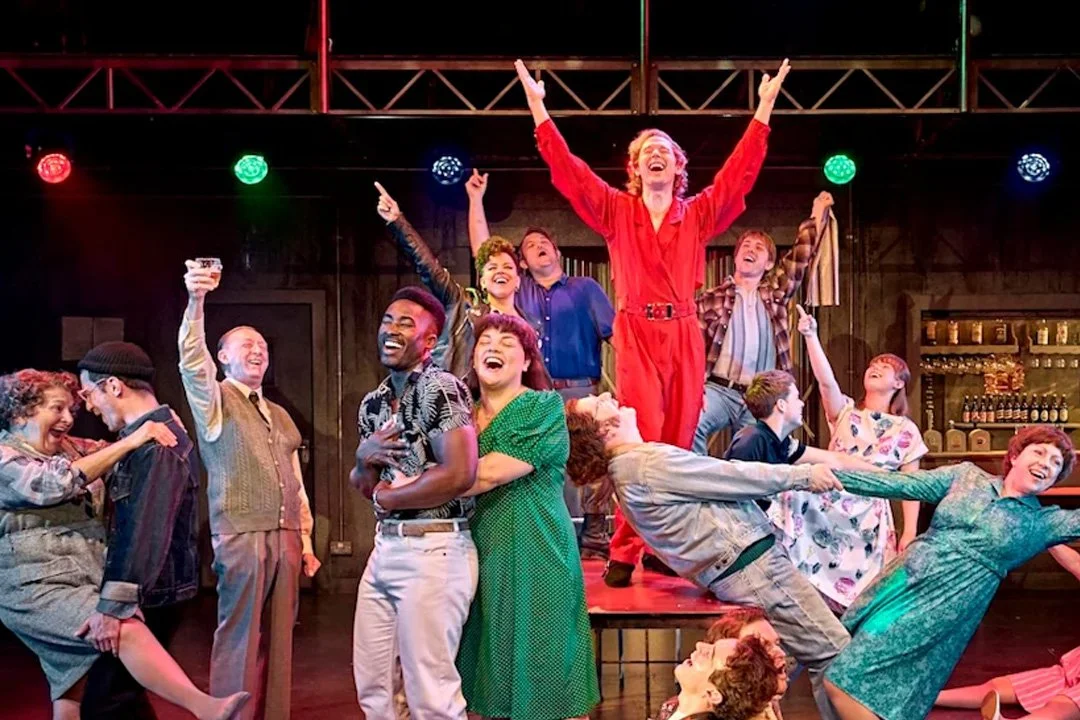
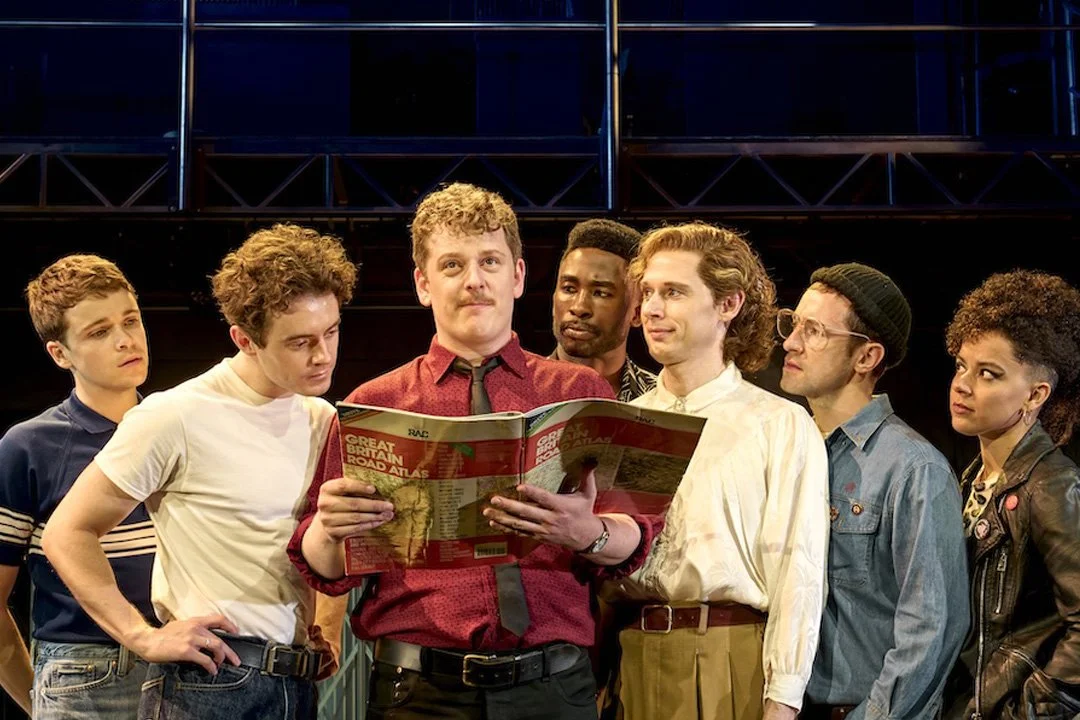
PRIDE is on at the National Theatre’s Dorfman Theatre from 11th June to 12th September. Tickets available here
review: Simon J. Webb
photographs: Manuel Harlan