Tom na Fazenda (Tom at the Farm)
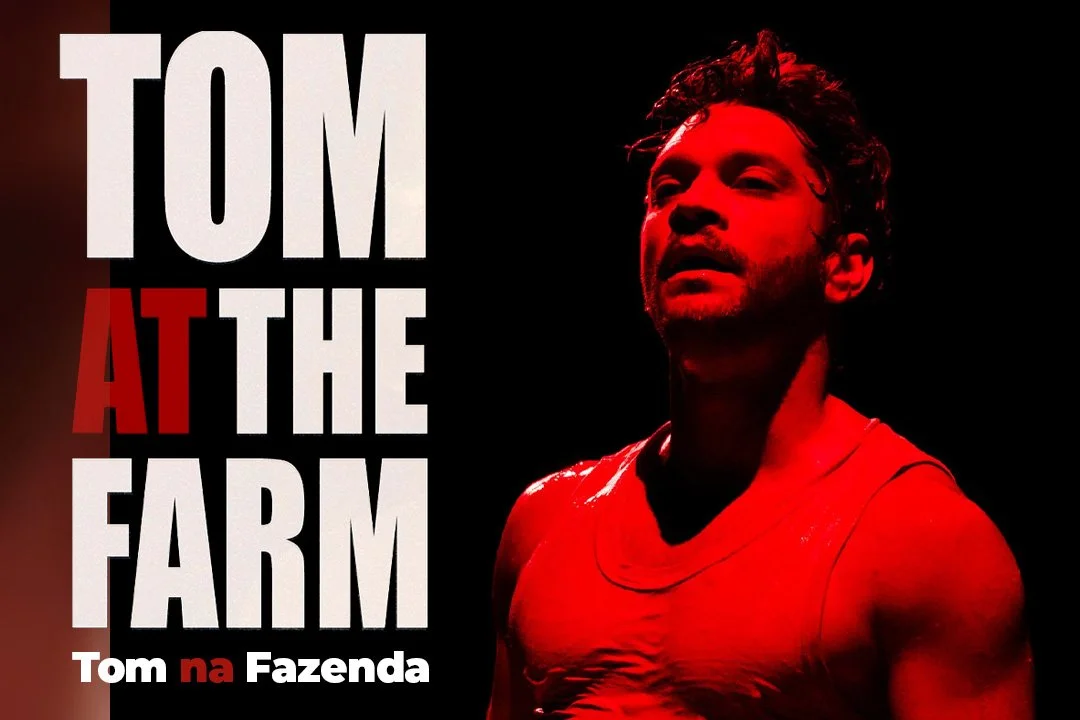
Tom at the Farm runs at the Barbican Theatre from 13th October - 17th October 2026
Tom at the Farm (Tom na Fazenda) has been on quite a journey before arriving for its short run at The Barbican Theatre. Written by celebrated Canadian playwright Michel Marc Bouchard, the play was first performed in French in 2011 at Montreal’s Theatre D’Aujourd’hui to critical and audience acclaim. In 2013 the story about an urban advertising executive who travels to a remote rural farm for his deceased boyfriend’s funeral came to the attention of a much wider, more global audience through Quebec film director Xavier Dolan’s 2013 film adaptation, Tom a la ferme. Dolan was inspired to make the film after seeing the play and created a psychological thriller that went on to win the prestigious FIPRESCI Critics’ Prize at the 70th Venice International Film Festival. Fast forward another four years and, having himself seen Dolan’s film, Brazilian actor and producer Armando Babaioff bought the rights in 2015 and translated the story into Portuguese, his adaptation, Tom na Fazenda premiering in Rio de Janeiro in 2017. Since then, this version has been performed across three continents, collecting a slew of awards along the way, before finally making it to the London stage for its European premiere at the Barbican Theatre.
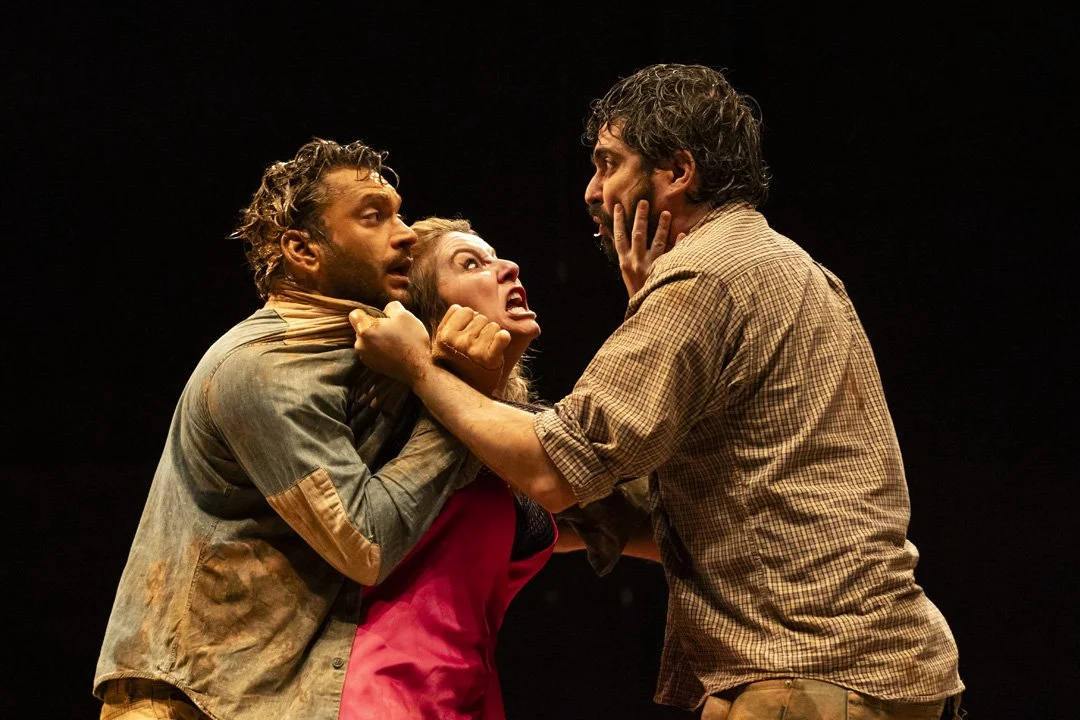
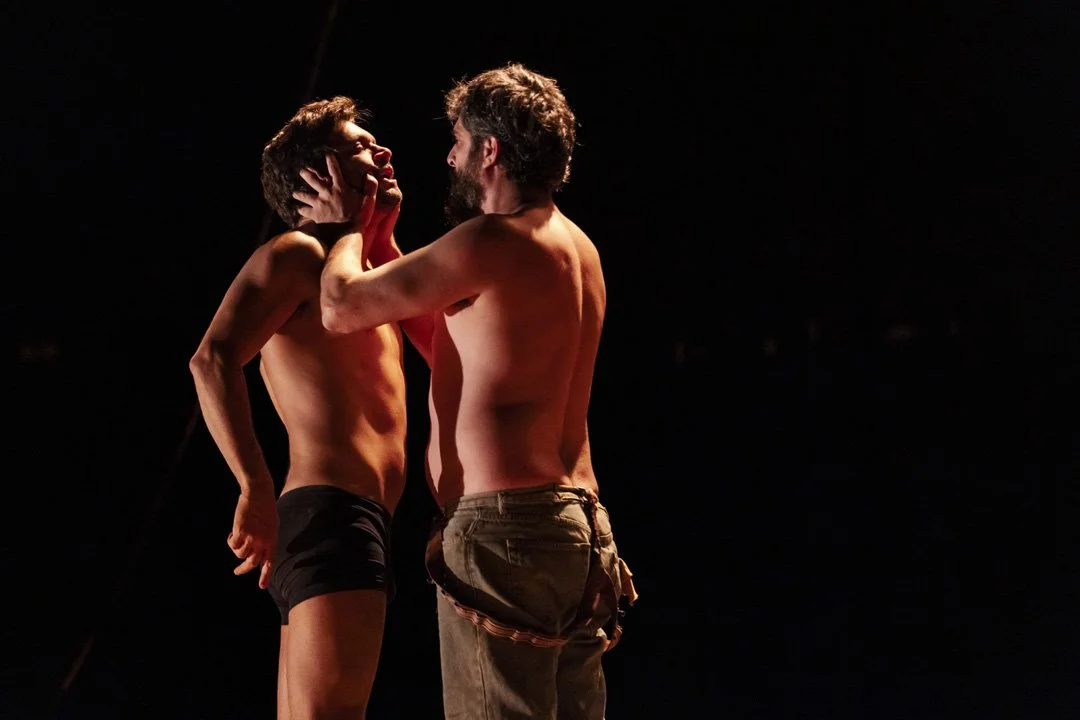
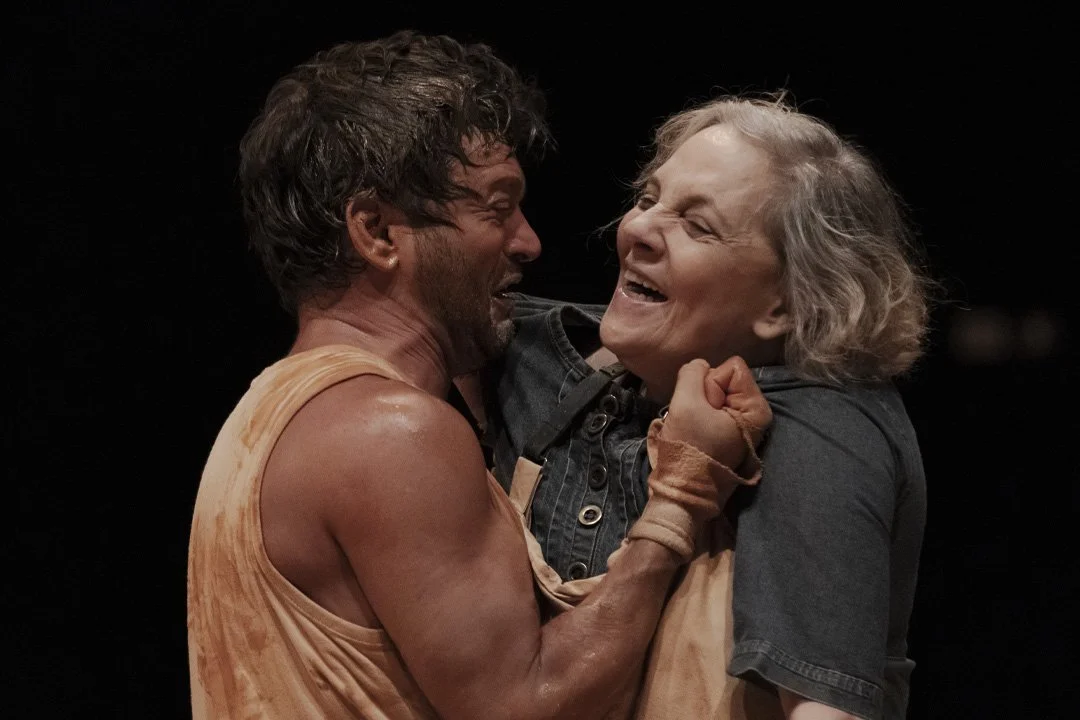
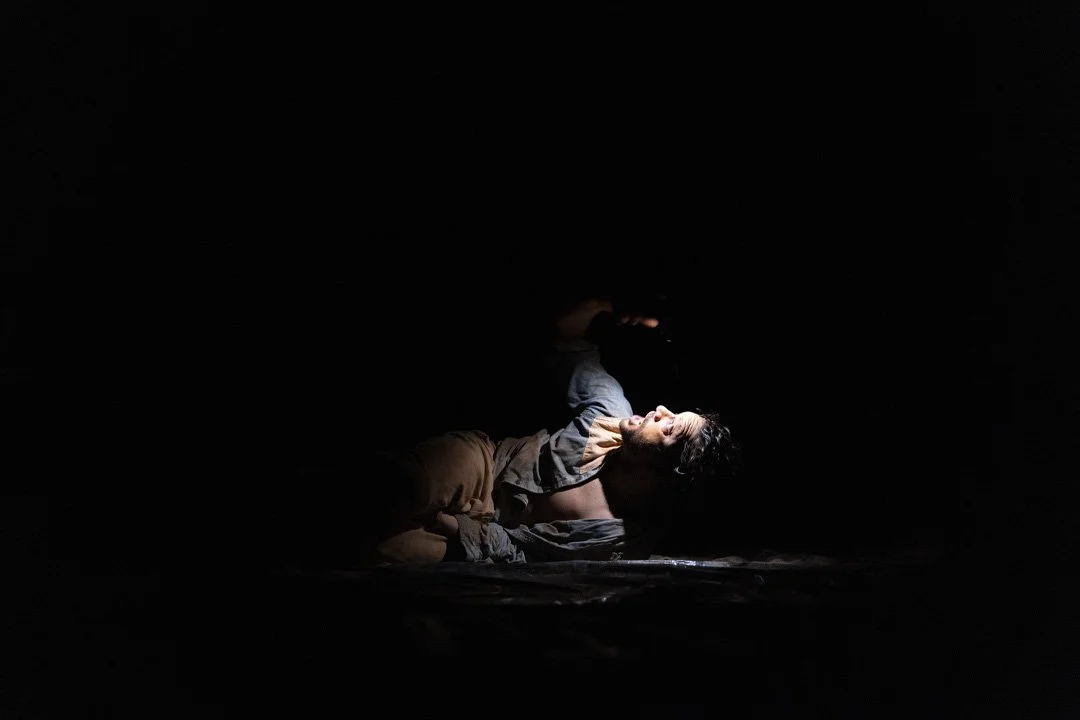
In the story, having arrived at his deceased partners remote family farm, Tom is shocked to discover that his partners mother (Denise Del Vecchio), has no idea that her precious son was gay, or indeed that the man that now stands before her was in fact his lover. The deceased’s sexuality had been kept a secret by an older brother, Francis, who, having found pictures and poems that revealed his brothers sexuality shortly after he moved away, had been determined that his mother would be spared the shame such a revelation would bring on the family in the small community where they lived and so, having imagined that one day Tom would show up at the family’s door, proceeds to force him in an increasingly brutal fashion to keep the lie alive. For Tom, the deceptively simple country farm he had initially arrived at soon becomes a prison from which he finds himself unable to escape and, as time passes, we watch uncomfortably as grief, deceit, violence, love, aggression, manipulation and lies all become interchangeable ways of dealing with repressed feelings and emotions during a situation that is rapidly spiralling out of control. For Tom, and the audience watching, the tension is psychologically intense as we watch their relationship descend into increased physical violence and coercive behaviour.
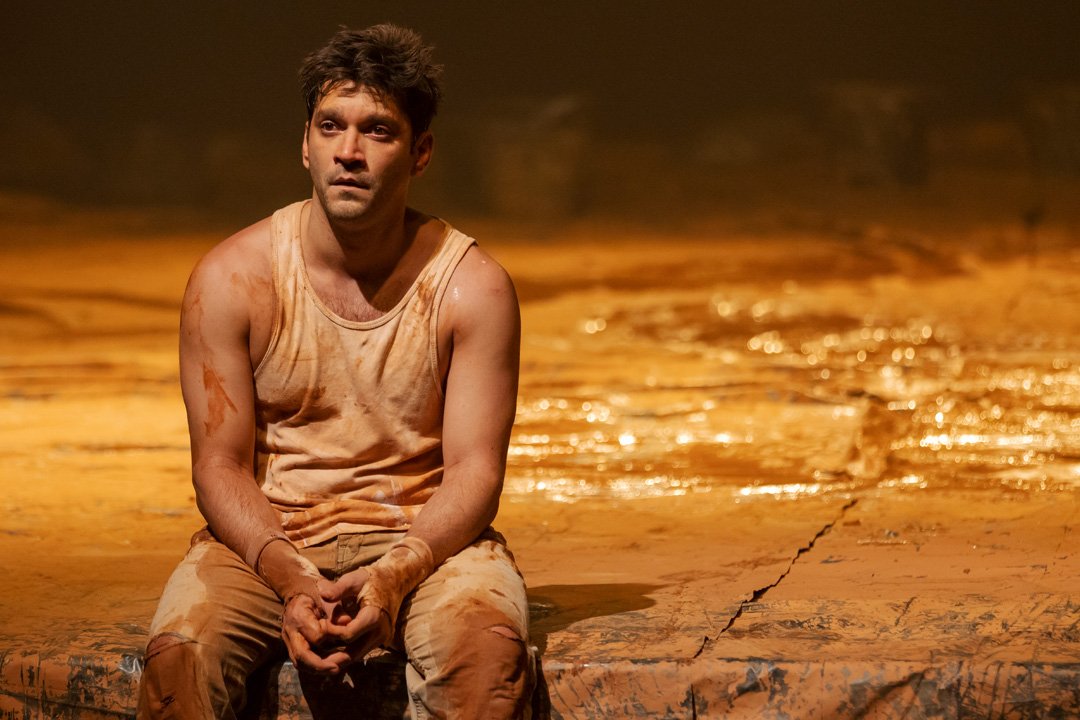
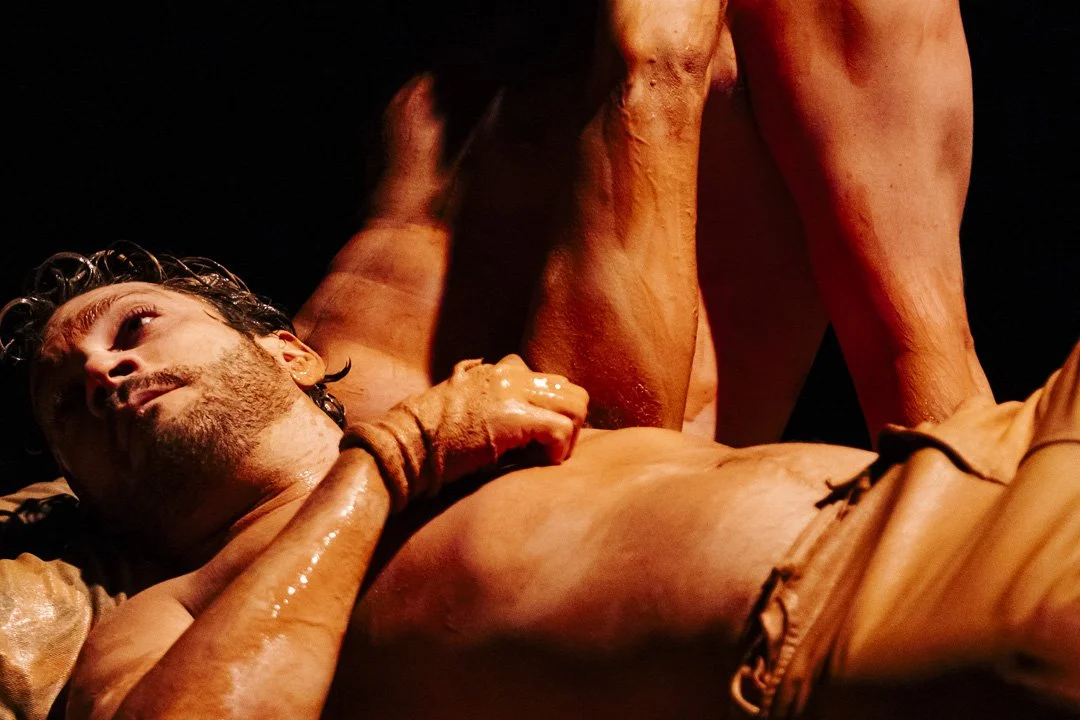
Performed in Portuguese with subtitle screens showing an English translation, (less intrusive than you might imagine), the play has remained stylistically the same as director Rodrigo Portella and Babaioff’s original vision, stripping back the staging to its bare essentials, the predominantly black, albeit vast stage of the Barbican Theatre being covered by a huge plastic tarpaulin. This is itself covered in a light, terracotta-coloured dust to which the edition of water throughout the production, from buckets placed around it’s perimeter, slowly turns this landscape into a mud-laden arena where violence is increasingly born out of frustration. Whilst the expressionistic approach to the set emphasises the sense of alienation Tom immediately feels, having found himself far removed from the sharp suits and creature comforts he is infinitely more used to in his city life, this absence of any notable physical set is more than made up for by the sheer physicality of the performances on display which, as the play progresses, become brutally uninhibited. Tom and Francis’s increasingly mud-covered bodies, (as much a result of the farm work they undertake as the physical fights their push-and-pull relationship often descends into) slowly starts to strip them not only of their physical individual identity but also of their emotional identity, the lines becoming increasingly blurred between abuse and consent.
Whilst all of this results in an increasingly intense watch, (further enhanced by the fact that there is no respite for the audience with the absence of any intermission during this 2 hour play), the play is surprisingly not without the ability to find pockets of humour throughout. These offer some much-needed respite from the more intense moments, albeit an uncomfortable release off the tension given we know circumstances are highly likely to change at any moment during this plays unpredictable course. The arrival of Sarah, (Camila Nhary) as the ‘allegedly’ non-Portuguese speaking long-time girlfriend of the deceased son and lover, becomes a source of much of the plays more robust comedy moments, but it is only a matter of time before Tom must confront his increasingly life-threatening predicament once more. He may have somewhat sadomasochisticly convinced himself that this new life has the benefit of ‘feeling more real’ than the one he now seems prepared to leave behind, but there still remains one last painful truth he must confront that brings this ultimate sacrifice into sharp focus.
Tom at the Farm is an incredible piece of theatre, the demands the script makes on Babaioff and Salomao is responded to with two of the most committed performances I have seen for quite some time. Whilst the story that unfolds might at times be a deeply uncomfortable watch, this remains a mesmerising and thought-provoking production, and one definitely not to be missed if you ever get the chance to see it.
★ ★ ★ ★ ★
Tom at the Farm is on at the Barbican Theatre until 17th October 2026 Tickets available here
review: Simon J. Webb
photographs: Victor Pollack