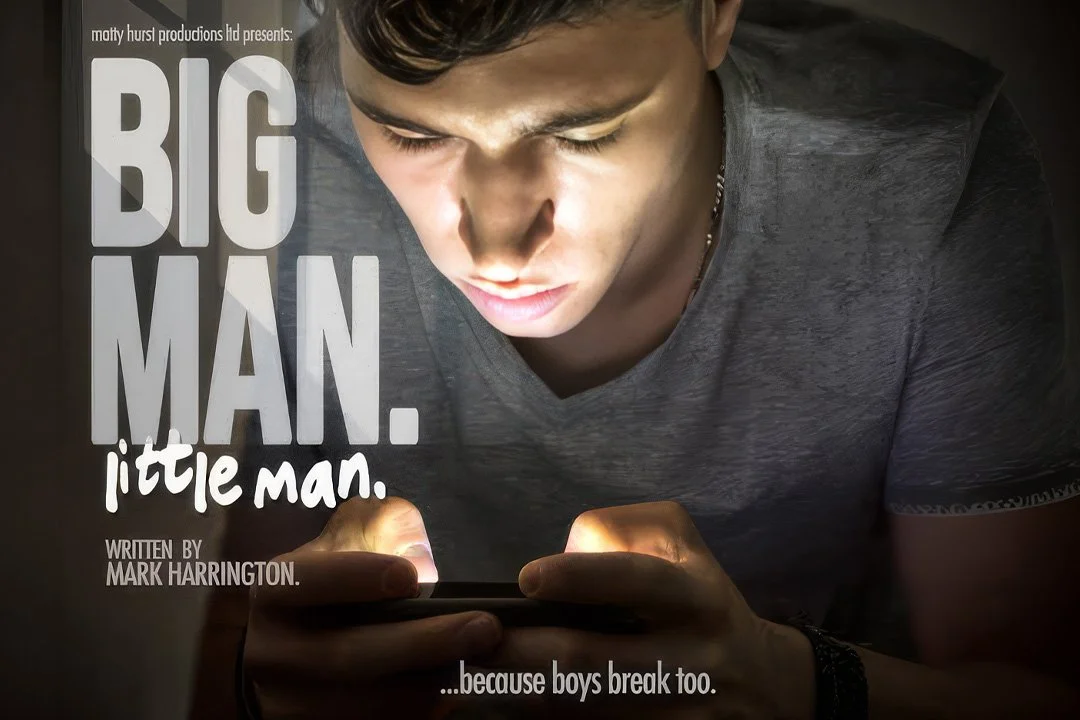
The Other Palace Studio - !5th October 2026
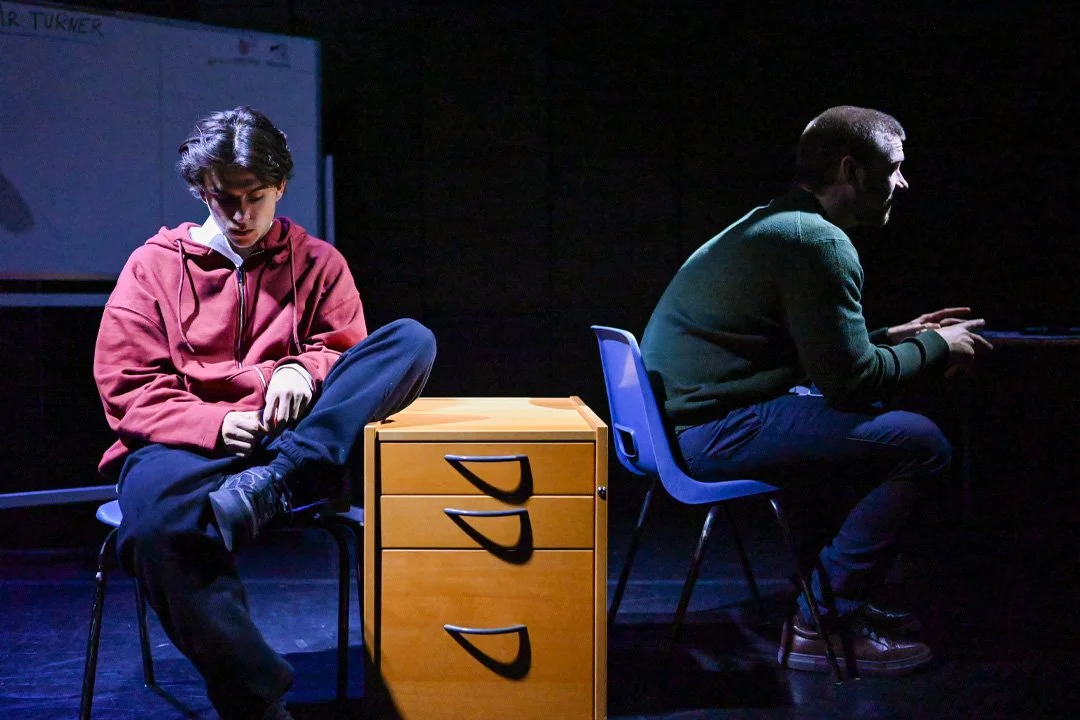
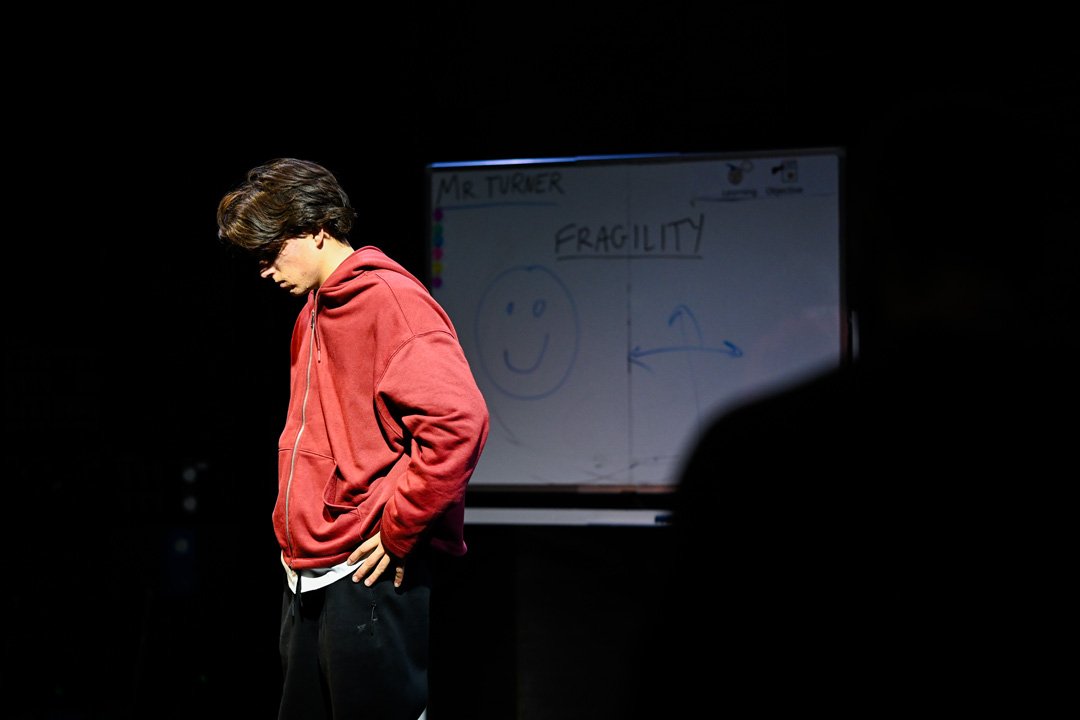
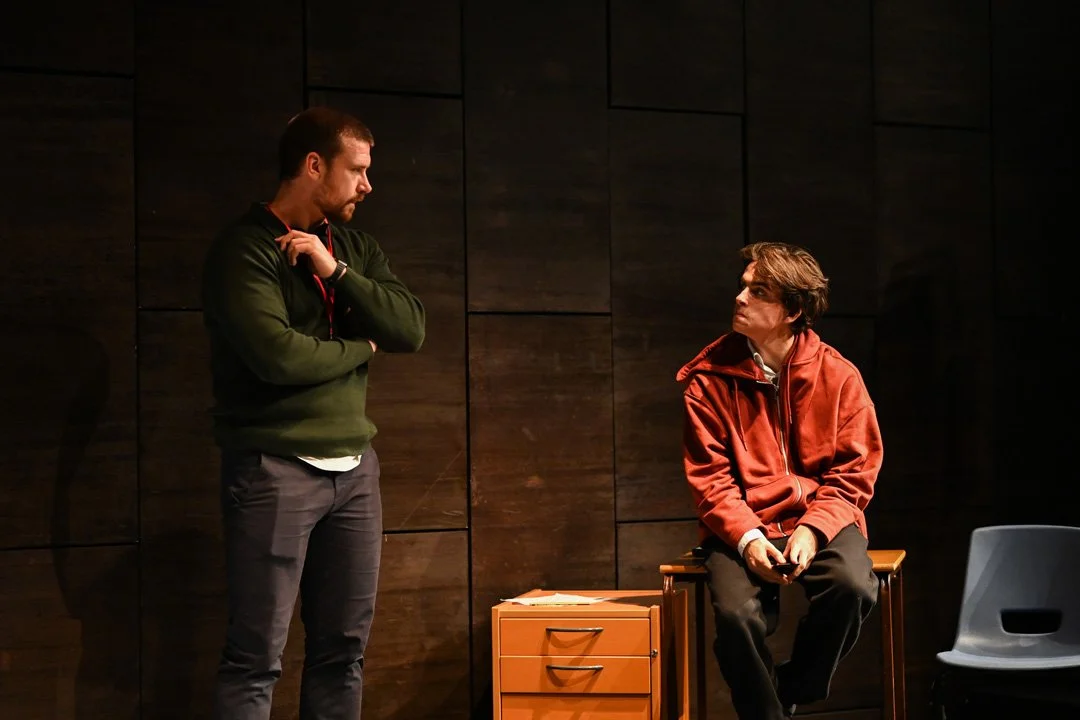
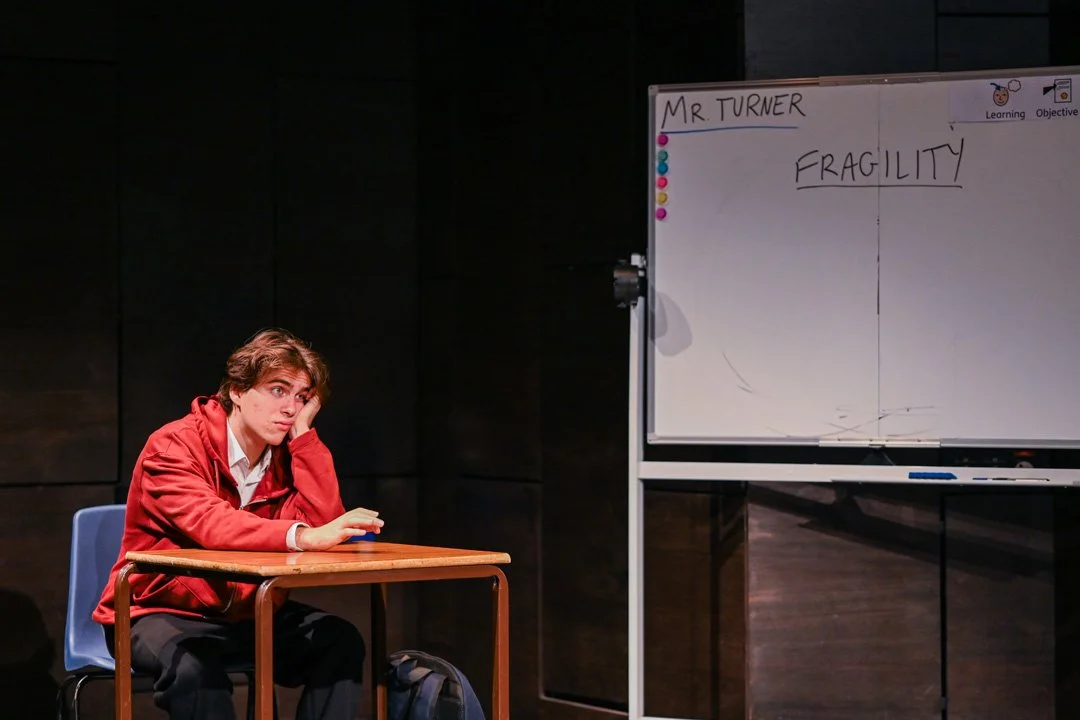
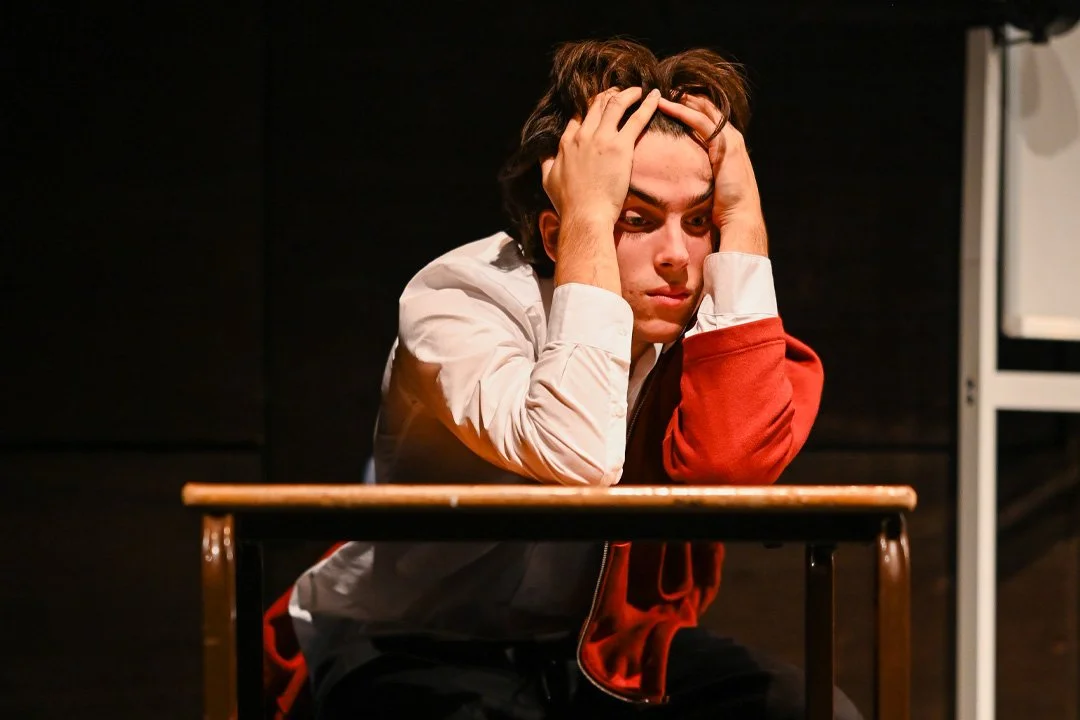
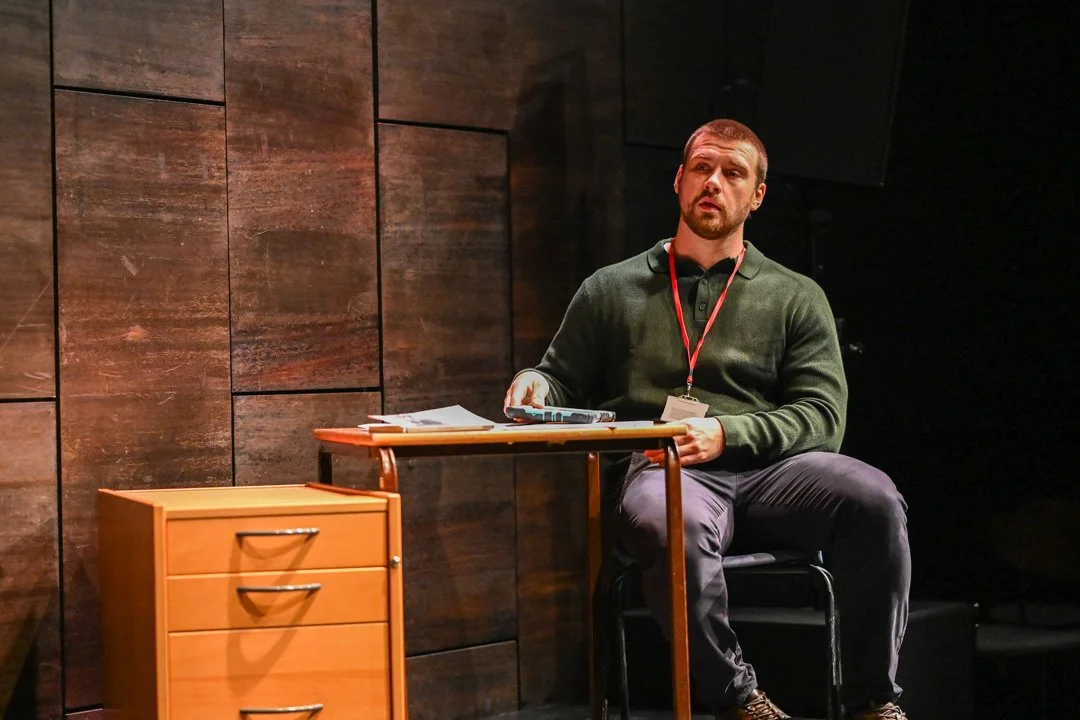
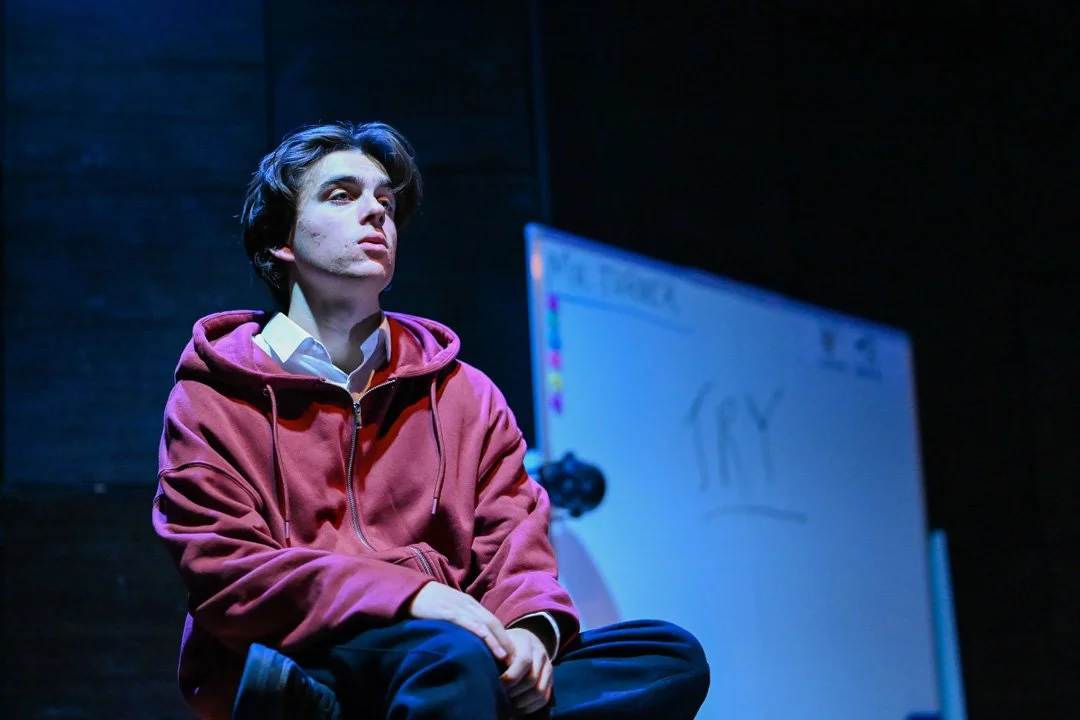
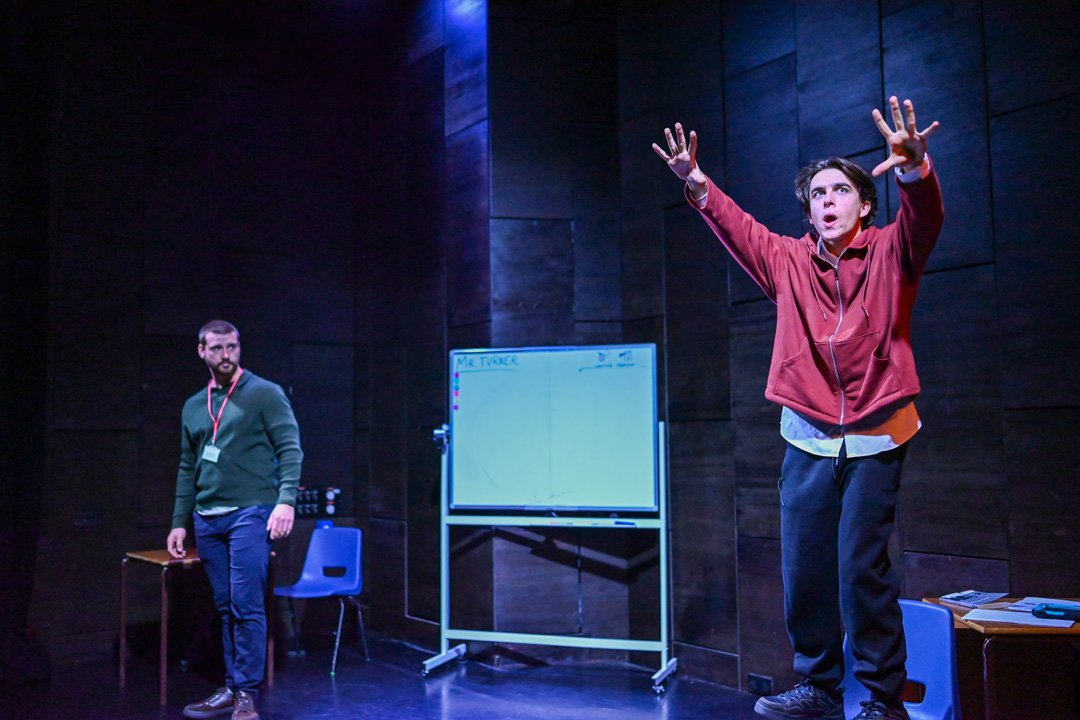
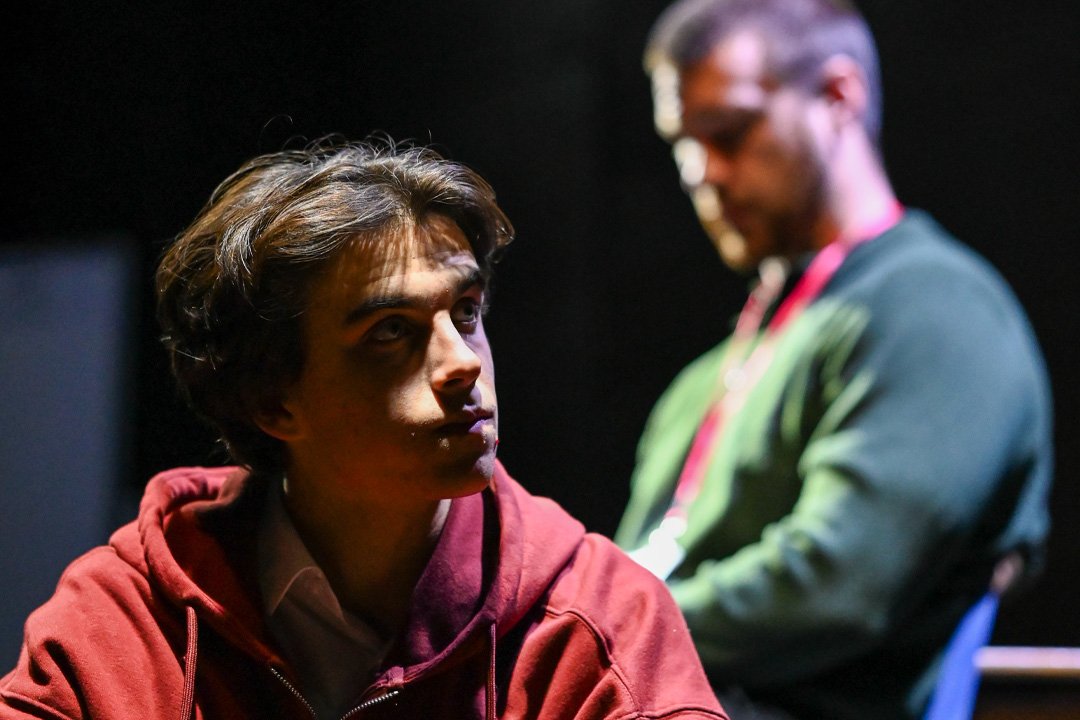
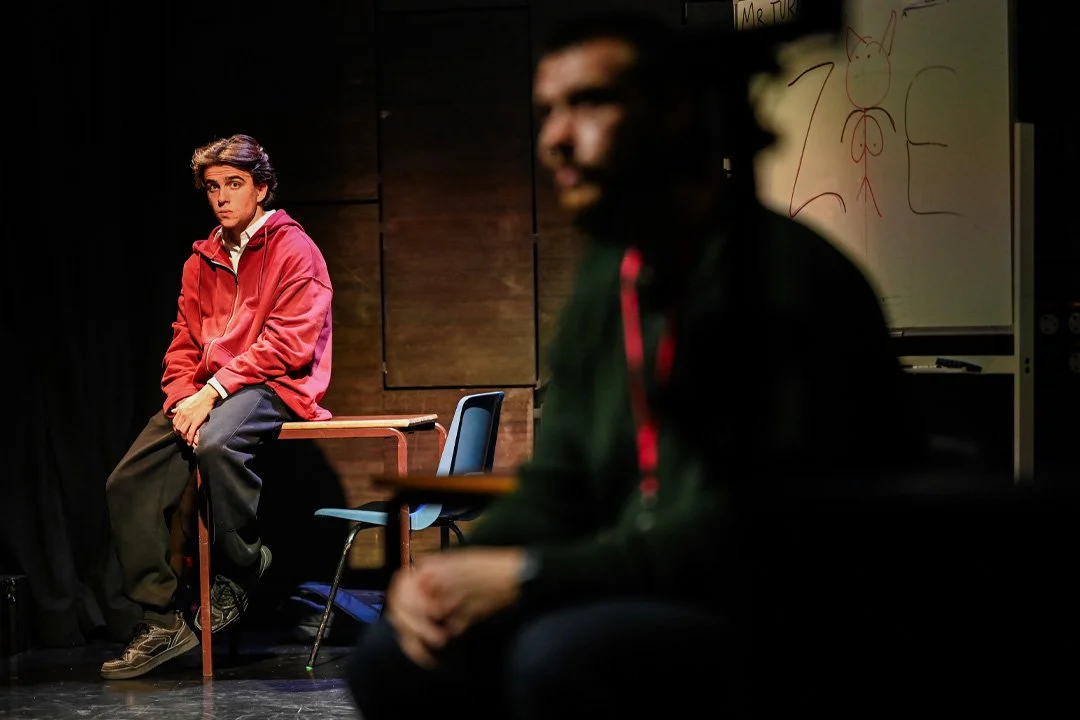
A famous piece of advice often cited in the process of any creative writing venture is to ‘write about what you know’, and first-time playwright Mark Harrington has done exactly that with this, his debut stage play. Harrington spent ten years in SEND Education (Special Educational Needs and Disability), and this experience is clearly reflected in Big Man. Little Man., it being the story of Tony, (Moses Azadeh) who is a combative neurodivergent teenager that finds himself being taught in class by Matt Turner, (James Crouch), a sympathetic teacher who both recognises and responds empathetically to Tony’s often challenging behaviour. Theirs is a fractious relationship at first, Tony having built a seemingly impenetrable emotional wall, his bravado a bid to convince the outside world that he has everything under control when, in reality, nothing could be further from the truth. Teenage years are tough to negotiate at the best of times, but Tony clearly has problems processing some of it’s more challenging encounters given he has never really had someone in his corner with who he is able to open-up emotionally to help him process some of life’s more emotionally challenging moments. With patience and hard work however, Matt appears to be getting closer than most in gaining Tony’s trust, the continuity and care of his attention allowing Tony to slowly lower his guard… until events once again begin to spiral out of control.
It’s a series of events that means our introduction to the two characters is seeing them giving statements in a police station where, whilst they are being interviewed separately, director Jordan Langford’s stage choreography allows the audience to see both interviews unfold simultaneously. It’s an interesting approach (albeit not without its problems… more of which later) which is partly achieved by having the interviewing PC (Shannon Rewcroft) appear, or rather ‘not’ appear, in the form of a vocal-only performance, her voice being played in over speakers off-stage, a creative decision I assume designed to help with the perception that the Police Office is present in both interview rooms during the individual giving of statements, the audience watching the action alternate back and forth between the two seperate sessions.
With these segments also jumping between scenes that take place at the school that begin to reveal the events that have led both teacher and student being questioned by the police, there is quite a lot of back-and-forth between the police interviews and the events themselves. Whilst this works well stylistically, it never being anything less than completely apparent when, and where, we are in the story, the transitions are abruptly marked by a repetitive, and none-to-subtle ‘jingle’, that itself starts to grate due to its excessive use as a transitional marker plus its unnecessary volume, considering the intimate nature of the studio space at The Other Palace theatre. The accumulative effect was that it rather jarringly takes the audience increasingly out of the action rather than drawing them into it. Unfortunately, it was a similar story with the disembodied voice of the PC. Whilst the idea itself was not a bad one, the voice was once again amplified well above the volume required for such an intimate room, and with both actors being un-miked for their own performances, there was once again a disconnect to these scenes as a result.
As frustrating as these issues were, (albeit ones that the tech rehearsal could have flagged in advance of the performance itself) they are at least easily fixable mistakes that could have been resolved were the play to enjoy a longer run. Thankfully, the core performances fared much better, with Moses Azadeh impressing with his ability to tap into his character’s teenage vulnerability so convincingly, and James Crouch skilfully conveying the teacher’s growing frustration with a system that ultimately limits his effectiveness when under pressure. However, it is Azadeh that really provides the plays emotional heart throughout, carefully making sure his portrayal of Tony doesn’t slip into a simple caricature of the ‘stroppy teenager’ archetype. It’s a performance that is both impressively nuanced and heartfelt, taking the audience on a journey that, whilst laced with moments of high-comedy is also at times devastatingly heartbreaking, making the aforementioned technical issues feel all the more unfortunate on this occasion.
As the first performance of a debut play, Big Man Little Man is as impressive as it is relevant to our times. It’s an example of how events can sometimes conspire to effect societies youngest and most vulnerable, and how easily teenagers like Tony can fall through the cracks through no fault of their own when there is knowone on their side to notice them, listen to them and look out for them. I very much hope this isn’t the end of Big Man. Little Man’s journey as Harrington’s play remains an important, insightful watch.
★ ★ ★ 1/2
review: Simon J. Webb
photographs: Mollie Proctor